
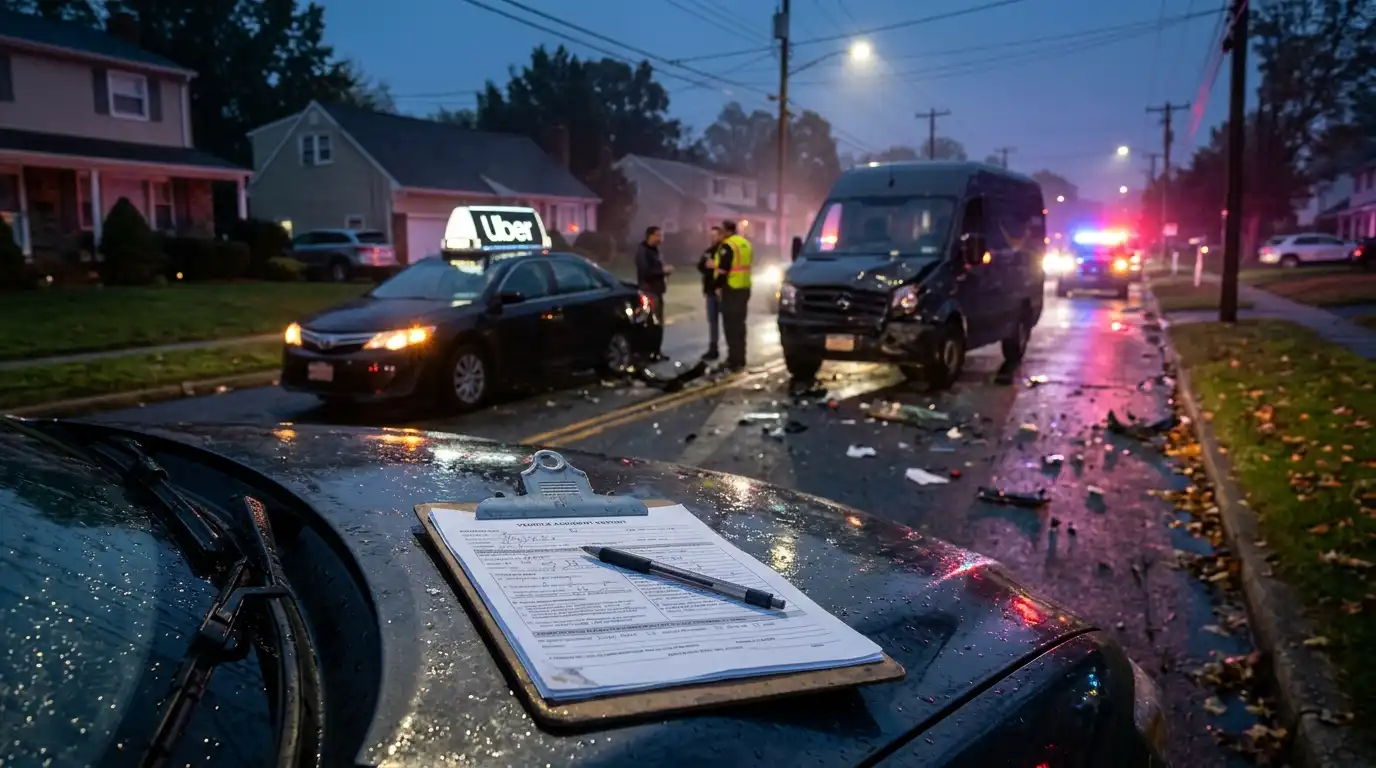
Untangling complex insurance tiers, corporate liability doctrines, and competing adjusters when rideshare drivers and gig delivery vehicles crash.
The Core Complexity: Two Layers of Commercial Coverage
In a standard two-car accident between private vehicle owners, liability typically traces back to a single primary insurance policy carried by the at-fault driver. When gig platforms and delivery fleets intersect, that simplicity vanishes. Both entities are backed by distinct, multi-layered insurance structures designed to shift financial risk whenever possible.
Insurance adjusters on both sides immediately begin analyzing micro-details to shift fault or deny primary responsibility. The rideshare insurer will scrutinize the delivery company’s commercial policy limits, while the delivery company’s legal team will analyze the precise millisecond of the rideshare driver’s GPS signal to downgrade their own liability exposure.
Rideshare Insurance Tiers: The Power of App Status
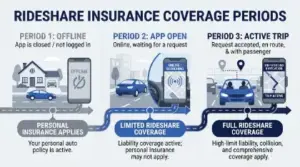
To determine how much insurance coverage an Uber or Lyft vehicle carries at the moment of impact, state laws and corporate policies divide driver activity into three distinct legal phases:
- Phase 1 (App Off or Offline): The driver is operating their personal vehicle for personal reasons. The rideshare company (Uber/Lyft) provides zero coverage. Recovery relies entirely on the driver’s individual auto insurance policy.
- Phase 2 (App On, Waiting for Match): The driver is logged into the platform and actively seeking a fare, but has not accepted a trip. Uber and Lyft typically provide contingent liability coverage (often $50,000 per person / $100,000 per accident for bodily injury), which kicks in only if the driver’s personal policy denies coverage.
- Phase 3 (En Route or Passenger Onboard): The moment a driver accepts a ride request until the passenger exits the vehicle, the commercial policy expands dramatically. Both major platforms provide up to $1,000,000 in third-party liability coverage, alongside contingent uninsured/underinsured motorist protection.
Delivery Vehicles: W-2 Fleets vs. Gig Delivery Drivers
Evaluating the second half of the collision—the delivery vehicle—requires identifying whether the operator is a traditional W-2 employee or an independent gig contractor:
Corporate Fleets (UPS, FedEx, Amazon DSPs)
Traditional courier services and major delivery corporations operate structured commercial fleets backed by substantial umbrella policies, often valued between $1,000,000 and $5,000,000. Under the doctrine of respondeat superior, employers are held directly liable for the negligent actions committed by their employees while acting within the scope of their employment. If an on-duty Amazon driver runs a red light and hits an Uber, the parent logistics entity or its delivery service partner bears primary liability.
Food & Package Delivery Gig Apps (DoorDash, Instacart, Grubhub)
Food and errand delivery services present a different legal hurdle. Similar to rideshare apps, these platforms treat drivers as independent contractors. While some services maintain excess commercial auto policies during active delivery windows, others require workers to rely on personal policies carrying expensive commercial endorsements. If the driver fails to maintain commercial coverage, their personal carrier may issue a total claim denial due to “business-use” exclusions.
Navigating Finger-Pointing Adjusters and Comparative Fault
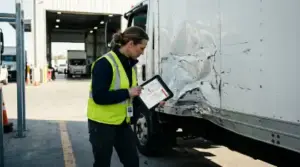
When an Uber crashes into a delivery van, mutual fault is common. One driver might speed through an intersection while the other executes an unsafe left turn. In these multi-party scenarios, state rules on comparative negligence dictate how financial recovery is divided among parties.
Insurance adjusters rely on these rules to delay settlement negotiations. The delivery company’s insurer will argue the rideshare driver had the last clear chance to avoid the crash, while the rideshare carrier will claim the delivery van blocked line-of-sight. Without decisive evidence, injured victims find themselves caught in prolonged settlement stalemates while insurers dispute percentage allocations of fault.
Critical Evidence Required in Multi-Party Gig Claims
Untangling conflicting stories from multiple drivers and corporate legal teams demands swift, rigorous evidence collection. Key discovery items include:
- Telematics and GPS Logs: Timestamped digital records from both the rideshare application and the commercial delivery vehicle’s onboard telematics system reveal exact speed, braking patterns, and app phase statuses.
- Dashcam and Video Footage: Commercial delivery vans are increasingly outfitted with interior and exterior dashcams (such as Netradyne systems), which capture objective visual proof of driver distraction or right-of-way violations.
- Corporate Maintenance and Electronic Logging Devices (ELDs): For heavy commercial delivery vehicles, maintenance records and driver fatigue logs show whether vehicle component failure or illegal shift hours contributed to the crash.
Protecting Your Claim After a Complex Collision
If you find yourself injured in a collision involving a rideshare vehicle and a commercial delivery truck, do not rely on insurance adjusters to sort out fault fairly. Secure immediate medical documentation, avoid giving recorded statements to third-party adjusters without legal guidance, and consult official regulatory resources through the Federal Motor Carrier Safety Administration for standards governing commercial road safety.