The Anatomy of Fault in a Two-Car Rear-End Collision
Two-car rear-end collisions represent the most common type of traffic accident on American roadways. From a legal standpoint, they are also among the most straightforward to resolve due to established traffic safety doctrines.
In almost every jurisdiction, drivers are legally required to maintain a safe following distance based on speed, road conditions, and traffic density. When a lead vehicle stops and the trailing vehicle strikes it from behind, insurance adjusters immediately apply a legal presumption of negligence against the rear driver.
Key factors that define liability in a two-car rear-end crash include:
- Failure to Maintain Safe Distance: Drivers who follow too closely violate basic traffic duty regulations, creating an automatic presumption of fault.
- Distracted Driving: Texting, adjusting dashboard controls, or failing to observe slowing traffic ahead usually seals the trailing driver’s liability.
- Limited Rebuttal Defenses: The rear driver can rarely rebut this presumption unless they prove sudden, illegal stopping without functional brake lights or an unavoidable third-party hazard.
Because fault normally sits squarely on one driver, insurance negotiations focus primarily on validating the extent of physical injuries and property damage rather than debating who caused the impact.
Why Multi-Vehicle Pileups Complicate Fault Determination
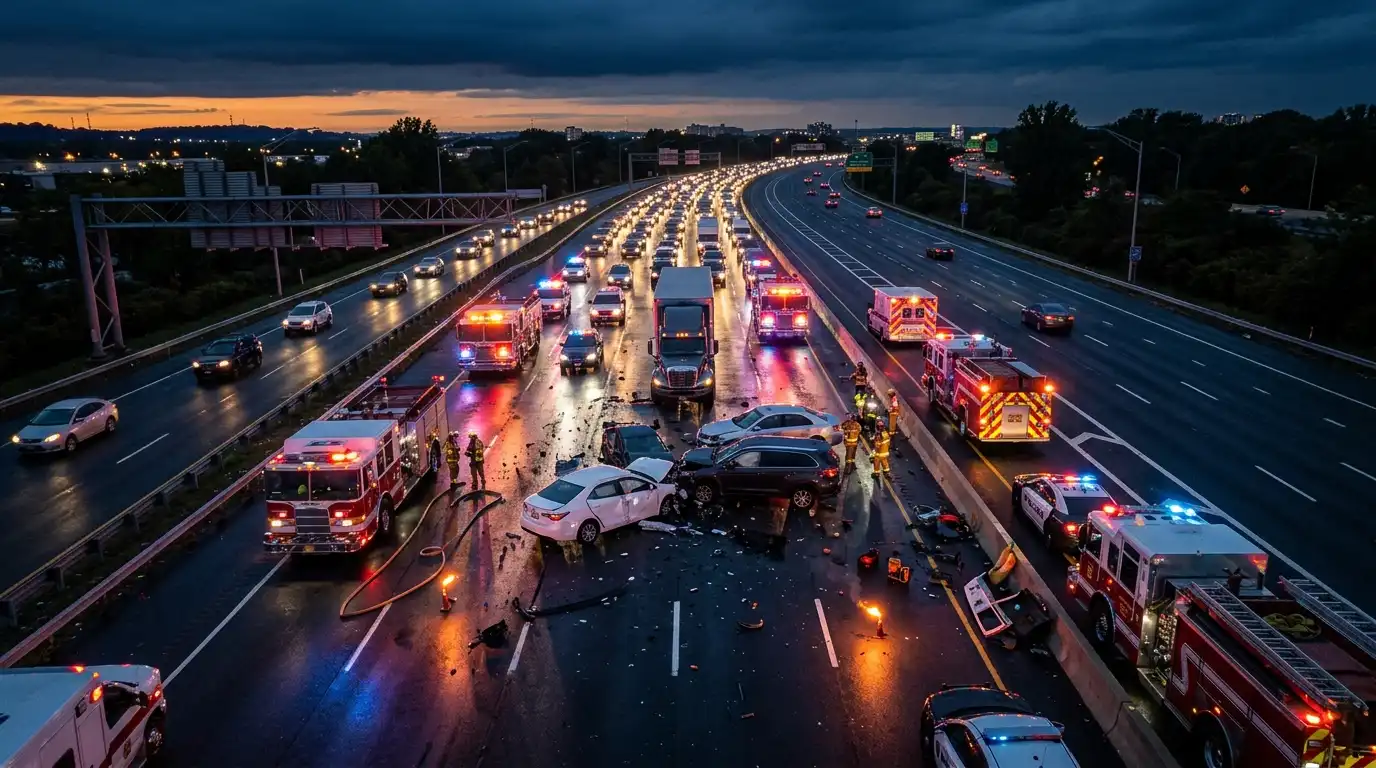
In contrast to a simple rear-end crash, a multi-vehicle pileup—often involving three, five, or dozens of cars—completely dismantles simple legal presumptions. Chain-reaction crashes frequently happen on high-speed interstate corridors during poor weather conditions like heavy fog, black ice, or sudden downpours.
Determining liability in a multi-car pileup requires establishing who initiated the first impact and whether subsequent drivers contributed independently to secondary collisions. Multiple insurance companies immediately deploy investigators to protect their own policyholders, leading to pointing fingers and delayed claim processing.
Investigators evaluate several complex legal frameworks during a pileup investigation:
1. Chain-Reaction Sequencing
Adjusters must reconstruct the exact sequence of impacts. Did Car A hit Car B, pushing Car B into Car C? Or did Car B hit Car C first, only to be struck behind by Car A a second later? Audio recordings from dashcams, event data recorders (EDRs), and detailed physical damage matching become vital evidence in mapping the precise chain of events.
2. Comparative Negligence Rules
Unlike two-car accidents where liability is often 100% assigned to one party, pileups frequently split liability across multiple motorists. Under comparative fault doctrines, an injured driver’s total recovery is reduced by their assigned percentage of responsibility. For an in-depth breakdown of state-by-state fault thresholds, review our guide on Highway Safety State Statistics and Laws.
3. Environmental vs. Human Factors
Defense attorneys often argue that severe weather conditions or sudden visibility loss constituted an “unavoidable act of nature.” However, courts generally maintain that drivers must adjust their speed and distance to match hazardous weather conditions.
How Insurance Policy Limits Affect Settlement Payouts
The single biggest operational difference between a two-car rear-end claim and a multi-vehicle pileup claim lies in insurance policy limit allocation.
In a typical rear-end collision, the injured driver makes a claim against the single at-fault driver’s bodily injury liability policy. If the at-fault driver carries standard state minimum coverage (e.g., $25,000 per person / $50,000 per accident), the single victim often recovers the full required compensation from that policy or taps into their own Underinsured Motorist (UIM) coverage if damages exceed policy boundaries.
In a multi-vehicle pileup, the math becomes far more challenging:
| Claim Factor | Rear-End Collision (2 Cars) | Multi-Vehicle Pileup (3+ Cars) |
|---|---|---|
| Fault Allocation | Usually 100% on rear driver | Split among multiple drivers (%) |
| Policy Limit Competition | Single claimant against policy | Multiple victims competing for cap |
| Settlement Timeline | 3 to 6 months average | 12 to 24+ months average |
| Evidence Requirements | Police report, medical bills | EDR data, crash reconstruction expert |
When an at-fault driver’s policy has a total “per accident” cap (such as $50,000 total payout per incident), that single pot of money must be divided among all injured parties in the pileup. If five people suffer injuries totaling $200,000, the available insurance money falls drastically short. Claimants must then pursue secondary recovery avenues, including stacking personal PIP/UIM policies, identifying commercial vehicle liabilities, or filing civil lawsuits against multiple negligent parties.
Essential Steps to Protect Your Settlement Claim
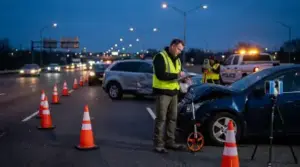 If you are involved in either a rear-end collision or a multi-car pileup, taking immediate, structured actions helps preserve your physical health and financial recovery rights:
- Seek Immediate Medical Evaluation: Soft tissue injuries, whiplash, and internal trauma often present symptoms days after an impact. Documenting injuries immediately prevents insurers from arguing your condition was caused by a pre-existing factor.
- Obtain Police Reports & Incident Numbers: Ensure law enforcement responds and completes an official traffic collision report. In major pileups, multi-agency reports detail vehicle locations, roadway conditions, and initial officer observations.
- Never Give Recorded Statements Early: Insurance adjusters from other involved vehicles may contact you quickly to secure statements shifting blame onto your vehicle. Decline recorded interviews until you have reviewed your rights.
- Preserve Digital Evidence: Save dashcam footage, take wide photographs of all damaged vehicles on-scene if safe to do so, and secure contact information from independent non-driver witnesses.
Final Thoughts on Pileup vs. Rear-End Claims
While a rear-end collision relies on clear legal assumptions that streamline compensation, a multi-vehicle pileup involves intense dispute over fault percentages and limited insurance coverage. Navigating these claims requires thorough evidence collection, expert accident reconstruction, and strategic insurance negotiation to ensure you receive the settlement you deserve.